
Goblins,
I’ve been working with a few of you one-on-one lately (reply if interested), and it’s made me think more about what actually builds technical depth. If you master the fundamentals first, everything that comes after starts to click automatically. The problem is knowing where to start, and how to spend your time efficiently.
This week’s article and updates are built around solving that. Learn the sequence, train the reps, build real fluency.
Mastery isn’t speed. It’s order.
Warm-up questions:
☞ Why would two similar companies with the same EBITDA trade at different multiples?
☞ Walk me through the income statement.
☞ How do you calculate WACC?
Platform Updates
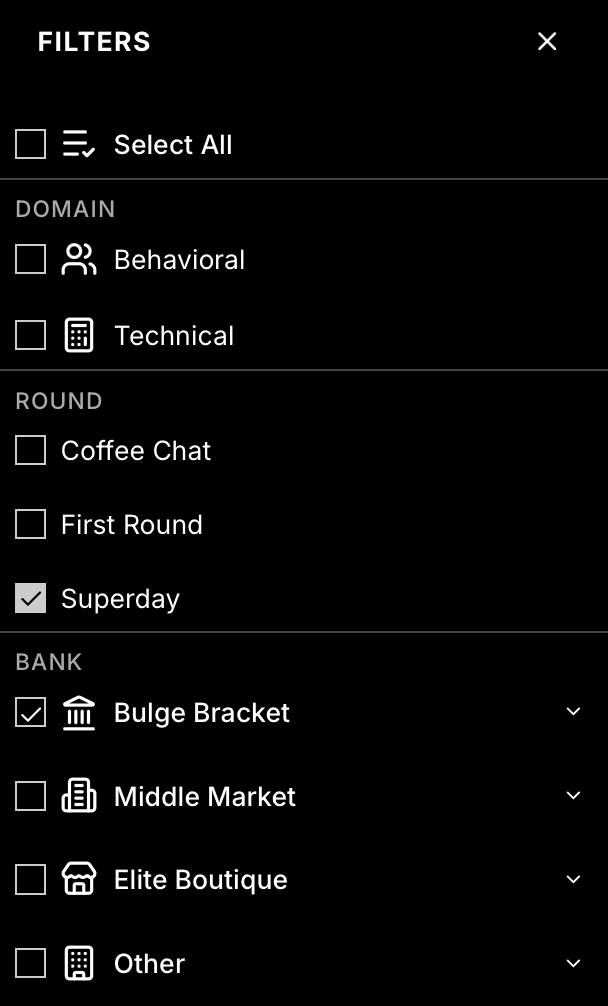
Interview Mode refined filters to allow filtering by round. Try it out before you’re heading into your next interview.

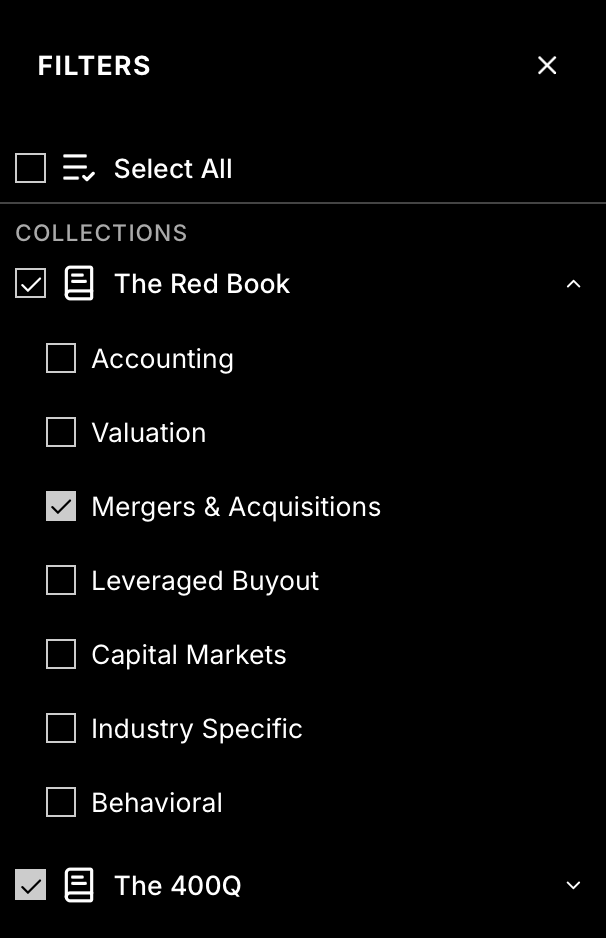
Study Mode refined pathways - this mirrors the order to follow in this weeks article on building technical competency
Google Auth cutover - new accounts will sign up/in using Google - if you have an existing account and you’d like your usage stats to carry over, reach out and we can migrate it.

Weekly Exploit: Learning Pathway
Learn sequentially, not by popularity—accounting unlocks valuation, valuation powers M&A, M&A logic extends to LBOs; the hierarchy matters more than volume stats, so build the foundation before chasing advanced topics
Master the mechanics before the judgment calls—you need to explain how depreciation flows through statements before you can debate terminal value methods; technical fluency is the entry ticket to applying strategic thinking
Interviewers test foundations through application—valuation multiples and accretion/dilution dominate question volume because they force you to prove you understand accounting, finance, and deal logic simultaneously
Connect the model to reality at every layer—accounting describes what happened, valuation assigns worth, deals show money in motion, and markets reveal where it flows next; if you can't link technical answers to real-world context, you're only halfway there
→ Read the full article here.
Last Week: Pipeline Strategy
Treat recruiting like a sales funnel—wide at the top (every bank is a lead), narrow in the middle (double down on traction), tight at the bottom (close one offer)—and move prospects through stages until you convert
Assume you're still in unless you hear "no"—silence isn't rejection, it's opportunity; keep following up professionally until someone explicitly cuts you
Map your energy to the priority matrix—max effort where they like you and you like them, stay persistent where there's silence but interest, let cold leads fall off naturally
You don't need the most conversations, you need one yes—detach from comparisons and timelines, focus on consistent action, and close clean when you get your offer
→ Read the full article here.
We got this one out over an hour ahead of schedule c’mon now.
Hit me up,
OFFERGOBLIN